At the southern tip of Kyushu, Kagoshima Prefecture is blessed with magnificent nature woven from volcanoes, forests and the sea.
Spectacular landscapes full of vitality are scattered throughout the prefecture, from the World Natural Heritage island of Yakushima to Kinko Bay overlooking Sakurajima’s volcanic plume, and Kirishima’s crater lakes and hot-spring villages.
It also has components of the “Sites of Japan’s Meiji Industrial Revolution,” with many historical remains preserving the memory of modernization.
Abundant nature and history, hot springs and famous sacred sites, and the warm-hearted atmosphere of the south: this article introduces Kagoshima’s attractions, famous places and top-100 scenic selections in detail, together with a map.
Kagoshima’s sights and attractions: Kirishima, Kinko Bay, Yakushima, Ibusuki Onsen and Sakurajima. A journey through the tropical south’s World Heritage, history, culture, nature and spectacular scenery

World Heritage: Yakushima and Reverberatory Furnaces Tell the Stories of Nature and Modernization
Kagoshima Prefecture has two World Heritage sites.
One is the renowned World Natural Heritage island of “Yakushima.”
Lying southwest of mainland Kyushu, this island was inscribed in 1993 as Japan’s first Natural Heritage site.
Mountains cover 90% of the island, reaching their highest point at the 1,936 m Mount Miyanoura. Known as the “Alps on the Ocean,” the island receives rain on hundreds of days each year.
Its groves of Yakusugi cedars, including the Jomon Sugi thought to be thousands of years old, embody an ancient forest. The primeval forest is also designated a Special Natural Monument.
Mount Mocchomu and Shiratani Unsuikyo, and Senpiro Falls, among other places, reveal natural scenery filled with mystery and stillness.

The other World Heritage site, inscribed in 2015, is the “Sites of Japan’s Meiji Industrial Revolution: Iron and Steel, Shipbuilding and Coal Mining.”

Surviving components in Kagoshima City include the Former Shuseikan (the reverberatory furnace ruins, machinery factory and engineers’ residence for the spinning mill), the Terayama Charcoal Kiln Ruins, and the Sekiyoshi Sluice Gate of the Yoshino Leat, preserving traces of the Satsuma domain’s efforts toward Japanese modernization at the end of the Edo period.

These precious remains convey the forward-looking spirit of the Satsuma domain, which adopted Western technology early. They are open to the public as developed historic-site parks.
These two World Heritage sites symbolize Kagoshima’s history through different perspectives: nature and industry, life and civilization. They reveal the depth of a regional culture embodying coexistence between people and nature.
Scenic Places, 100 Landscapes and Natural Monuments: The Majestic Landforms of Sakurajima and Kirishima
Kagoshima’s natural scenery is characterized by dynamic landforms shaped by volcanic activity.
First, “Kinko Bay,” selected among Japan’s 100 Landscapes, lies between the Satsuma Peninsula and the Osumi Peninsula. In the center of this inland sea rises its emblematic active volcano, Sakurajima.
The scene of Sakurajima’s volcanic plume against the blue bay has an overwhelming presence, and its majestic form can also be admired from downtown Kagoshima.
Another of the 100 Landscapes, “Mount Kirishima,” is a group of volcanoes extending across the prefecture’s northeast.
Mount Karakuni and Takachiho Peak are among the peaks said to form the setting of the myth of the heavenly descendant’s descent. Hot-spring villages scented with sulfur are scattered around their foothills.
The Kirishima range changes its appearance with the seasons and is popular with hikers. It is protected as part of Kirishima-Kinkowan National Park.

Among Special Natural Monuments, in addition to Yakushima’s primeval forest centered on Yakusugi cedars, a famous example is the Great Camphor Tree of Kamo in Aira City.
Around 1,500 years old, 30 m tall and 24 m in trunk circumference, it is one of Japan’s largest camphor trees, with an overwhelming vitality.

Also, Shibushi City‘s Biro Island Subtropical Plant Community, Ibusuki City and Minamiosumi Town‘s Wild Cycad Habitats, and Izumi City‘s Cranes and Their Migration Grounds are among the many Natural Monuments encompassing diverse plants and animals.
Another nationally designated Place of Scenic Beauty is the ancient port of “Bonotsu” in the southwestern Satsuma Peninsula, preserving the history of a port that prospered through Edo-period trade and as a base on the route of Japanese missions to Tang China.

Kagoshima’s Top-100 Sights: Spectacular Seas, Waterfalls and Cherry Blossoms
Many scenic places in Kagoshima Prefecture have been included in Japan’s top-100 selections.
First, Japan’s 100 Best Shores include, on the western coast of the Satsuma Peninsula, Fukiagehama Beach, and on Amami Oshima, Ohama Seaside Park.
Fukiagehama is Japan’s longest sandy beach, extending for 47 km. The beauty of the sun setting into the horizon also places it among Japan’s Three Great Sand Dunes.

Ohama Seaside Park, meanwhile, offers Amami’s blue-green sea and white sands and is also known as a sea-turtle nesting ground.
The 100 Best Waterfalls include, in Yakushima Town, Oko Falls, and in Aira City, Ryumon Falls.
With a drop of 88 m, Oko Falls is one of southern Kyushu’s largest waterfalls. Its powerful cascade has earned it the title “King of Japan’s Waterfalls.”
Ryumon Falls is a two-tiered waterfall 40 m wide and 46 m high, a scenic place where cherry blossoms in spring, fresh greenery in summer and autumn foliage are reflected in the water.

Also, Isa City‘s Sogi Falls is a famous waterfall known as the “Niagara of the East.” Although not among the 100 Best Waterfalls, it is a popular tourist destination.

Japan’s 100 Fine Castles include the former residence of the Satsuma domain’s lords, Kagoshima Castle (also known as Tsurumaru Castle), while Japan’s Next 100 Fine Castles include Shibushi Castle in Shibushi City and Chiran Castle in Minamikyushu City.

Chiran Castle was one of the Satsuma domain’s outlying castles. Nearby, the Chiran Peace Museum for Kamikaze Pilots and the samurai residence district have been preserved, making the area an important destination for historical tourism.

Among cherry-blossom spots, Isa City’s Tadamoto Park has been selected among Japan’s 100 Best Cherry-Blossom Spots.
Around 1,200 cherry trees are planted in the park, creating a tunnel of blossoms stretching for about 2 km in spring.
They are illuminated at night, creating a magical landscape.
Sacred Sites and Hot Springs: Southern Japan’s Faith and Renewal at Kirishima Jingu and Ibusuki Onsen
Kagoshima is a hot-spring prefecture with Japan’s second-largest number of spring sources, after Oita Prefecture.
Especially famous nationwide are the Kirishima Hot-Spring Area, Ibusuki Onsen, Myoken Onsen and others.
Kirishima Onsen has sulfur springs emerging on the slopes of Mount Kirishima. Many people combine a visit with Kirishima Jingu Shrine, which preserves the legend of the heavenly descendant’s descent.
Kirishima Jingu Shrine is an ancient shrine with a divine atmosphere, where the vermilion buildings contrast with the deep green of the forest.

Ibusuki Onsen, at the southern end of the Satsuma Peninsula, is a hot-spring town with spectacular sea views, known for “sand-steam baths,” in which bathers bury their bodies in the beach sand.
Nearby attractions showcasing nature’s sculptural beauty include Cape Nagasakibana, Mount Kaimon, Lake Ikeda, and, accessible on foot only at low tide, Chiringashima Island, among others.

Lake Ikeda is also said to be home to the legendary giant creature “Issie,” making it a popular spot shrouded in mystery.

There are also many historic shrines, including, in Izumi City, Hakozaki Hachiman Shrine, and in Minamikyushu City, Hirakiki Shrine, which enshrines the deity of Mount Kaimon. Southern Kyushu’s distinctive religious culture remains alive today.

Other Highlights: Sakurajima, Amami and a Blend of History and Culture
The name Kagoshima inevitably calls to mind Sakurajima.
Sakurajima remains volcanically active just 4 km from the city center, and the very lives of the people who live alongside the volcano are an attraction.
Just 15 minutes away by ferry, the island has observation points, footbaths and walking paths across lava fields, allowing visitors to feel the coexistence of people and nature firsthand.
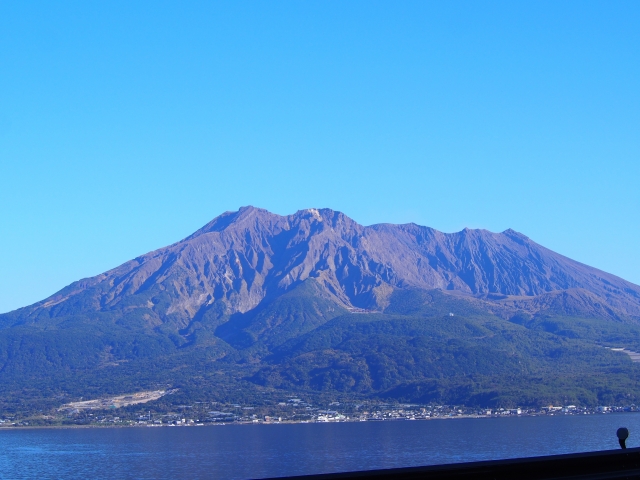
Amami Oshima and Tokunoshima are among the appealing outlying islands.
Their subtropical forests, exceptionally clear seas and ecosystems supporting rare plants and animals are highly valued as the “Amami and Ryukyu” World Natural Heritage.
Distinctive traditions such as brown-sugar shochu and island songs continue to captivate visitors.
The World Heritage Island of Amami Oshima and Its Neighbors: Geography, Attractions, and Map
Any exploration of the Satsuma domain’s history must also include places associated with Saigo Takamori.
Shiroyama and Nanshu Shrine, and the Saigo Nanshu Memorial Museum offer glimpses of the turbulent years of the Meiji Restoration.

Kagoshima is a “living land” where volcanoes and forests, hot springs and faith, and people’s daily lives form a single whole.
Visitors are sure to be captivated by both the warmth and the stillness of this southern land.
English page (Kagoshima prefecture. Map of sightseeing spots)
Geography of Kagoshima Prefecture
(External link) Kagoshima Prefecture Website
(External link) Kagoshima Prefecture Tourism Website: Kagoshima Journey


